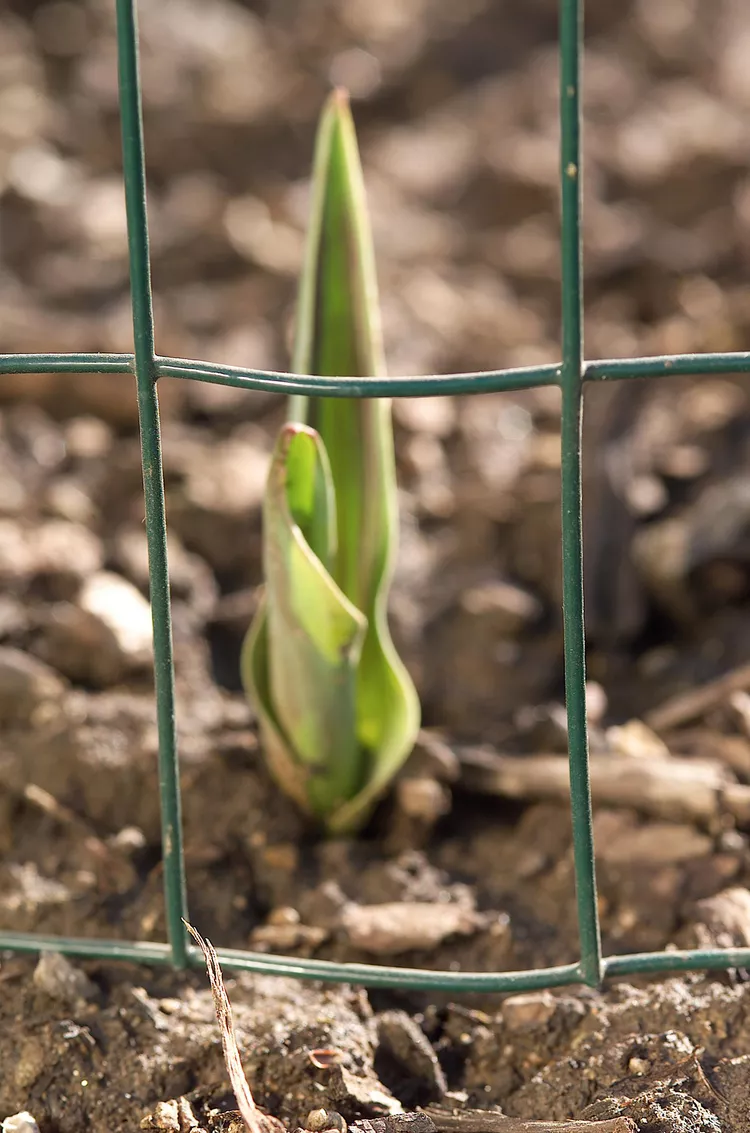
Daffodils look cheery, hyacinths smell divine, and crocuses pop up early in the season, but something about a bright, bold tulip inspires true spring joy. They come in so many dazzling colors and interesting shapes, including petal-packed forms that look almost like peonies. Unfortunately, that happy feeling can be cut short unless you take a few precautions to protect your bulbs. Many garden critters see these plants as tasty snacks, and the bulbs are susceptible to a few diseases if planted incorrectly. Use these tips to ensure you get the best tulip display, no matter what nature throws at you.
1. Install a Tall Fence
Tulips in a landscape provide a salad bar for deer. The most effective protection from deer is a fence. Install one that's at least 8 feet tall or two fences 4 feet tall and 4 feet apart. Deer can jump high or wide, but they can't do both at once. A tall fence also works to protect tulips from rabbits as long as the slats of the fence aren't too far apart so they can sneak between them.
2. Install a Short Fence
While the above-ground parts of tulips attract hungry creatures, the below-ground parts do, too. To foil groundhogs, chipmunks, and other burrowing animals, a fence that's at least 3 feet tall and 10-12 inches below ground (to prevent them from digging under the fence) is an effective deterrent.
3. Use Mesh
Squirrels and mice seem to take special pleasure in finding, digging, and nibbling tulip bulbs. How to protect tulip bulbs from squirrels and mice: wide wire mesh, such as chicken wire ($38, The Home Depot), is an effective deterrent. Lay it directly on top of the bed, extending the surface about 3 feet from the plantings, then stake it down.
You can also plant tulip bulbs in wire cages for tulip squirrel protection. Place the bulbs in the center of the cage and fill the edges with dirt so critters can't gnaw around the edges. Some gardeners place an old window screen on top of the ground to deter squirrels. Remove it once the ground freezes because tulip plants can't grow through the screening material as they can with chicken wire.
4. Plant Deeply and Clean Up
Some gardeners claim that planting a bit deeper enhances hardiness and makes it harder for digging pests to find tulip bulbs. Plant tulip bulbs at least three times the height of the bulb, and cover bulbs properly with soil so critters aren't attracted to the planting site. Always remove all evidence of bulb planting, including any dried bulb casings, from the area, too.
5. Apply Mulch Properly
Mulching bulbs is a great idea to conserve soil moisture and maintain a cool soil temperature. Just don't apply it too soon. Mulching when it's still warm provides a cozy place for critters to burrow in for the winter, and it may inspire them to dig into your bulbs. Wait until the ground is cold or frozen. Mulch helps keep soil temperatures consistently cool and will minimize damage from frost heaving.
6. Protect Tulip Bulbs in Pots
Tulips need about 12 weeks of cold chilling to bloom properly, but there is a risk of freezing when bulbs are planted in pots left outdoors. Use a freeze-proof pot at least the size of a half-whiskey barrel to provide enough protection. Place it in a protected area, such as inside a garage or near a house foundation, until the bulbs sprout in spring. You can also group large pots in a protected area and wrap them with burlap or other insulating material.
7. Plant in Well-Drained Soil
Tulip bulbs are native to dry Mediterranean climates and need excellent drainage to thrive. Planting in clay or other waterlogged soils suffocates the bulbs because there are no air spaces that allow roots to grow. Wet soil also promotes fungus and diseases.
Add compost and coarse builder's sand (not playground sand) to soil to promote good drainage. Planting in raised beds with amended soils may be the best solution in areas with dense soil.
8. Use Plant Deterrents
One way to foil bulb-eating animals is to interplant tulips with crown imperial (Fritillaria imperialis). This tall, dramatic plant emits an odor that repels critters. Critters also avoid alliums and daffodils, so interplanting with those bulbs may help protect tulips among them.
9. Try Repellents But Don't Rely on Them
Commercial pest repellent products fill garden center shelves as an easy option for protecting tulip bulbs from animals. Some might work in your yard, for a while. Deer, rabbits, rodents, and other critters often become so used to the repellent that it is no longer effective. Many are scent-based products that wear off after rain so they must be reapplied frequently. And remember, what works in one garden doesn't always work in another.
Folk remedies include hanging Irish Spring soap from mesh bags, scattering human hair clippings, sprinkling predator urine, dusting with cayenne or crushed red pepper, and spraying rotten egg mixtures around the garden perimeter. Again, the success of these remedies might vary.
10. Offer an Alternative Diet
Talk about a government handout! Gardeners at the White House in Washington, D.C., where tulip beds were routinely pillaged by marauding squirrels, decided to hang peanut-filled boxes in nearby trees. The squirrel-feeding program, in effect from fall planting time until bloom time, cut the bulb losses (although some squirrels still helped themselves to the tulip bulbs). The gardeners also acknowledged that the peanuts might have attracted more squirrels to the grounds.
New