Trends in interior design and landscape design often mirror one another. With the current increase in maximalist interiors that prioritize comfort and functionality above all else, it’s not surprising gardeners are seeing the same in outdoor design.
Practical trends like meadowscaping are taking off, and gardeners are increasingly gravitating toward gardening styles such as native gardens, pollinator gardens, and cottage gardens. Mediterranean gardens are among the garden styles gaining popularity, particularly as gardeners continue to experience increasingly hot summers.
Originating in the coastal regions surrounding the Mediterranean Sea, Mediterranean gardens are becoming increasingly popular all around the world. Here’s what to know about this popular garden trend, along with how to create a Mediterranean garden in your own backyard.
What is a Mediterranean garden?
A Mediterranean garden is inspired by the seaside landscapes of countries such as Greece, Italy, Spain, and Portugal. The region's climate influences the design and landscaping of Mediterranean gardens—think hot, dry summers and cool, humid winters.
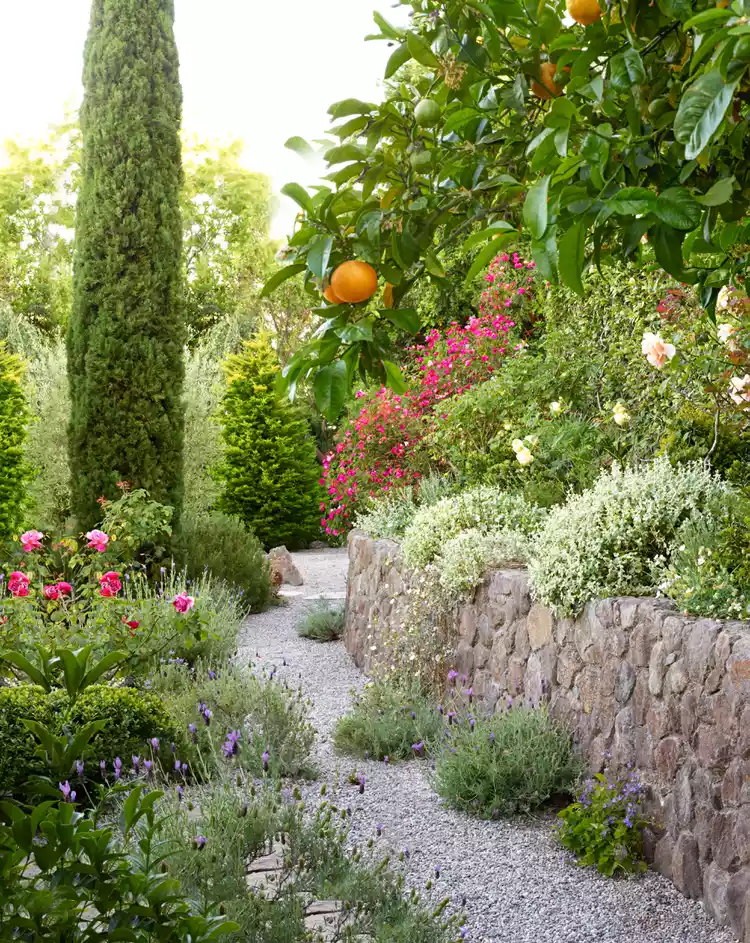
These types of gardens are characterized by drought-tolerant plants, seating with shade relief, stone and gravel hardscaping, terra-cotta accents, and water features to create a serene, sun-kissed backyard retreat, says Tony O’Neill, gardener, author, and digital publisher behind Simplify Gardening.
Compared to more formal gardening styles, Mediterranean gardens may seem informal in design and execution—but that’s the point. These backyard oases are designed to be easy to maintain and enjoy.
Tips for Creating a Mediterranean Garden
Prioritize Leisure and Relaxation
If you’ve never visited the Mediterranean region before, here’s something to understand—life is slower and simpler in the best way possible. Locals prioritize leisure and relaxation in all areas of life. People take time to sit together and enjoy a drink or morning cappuccino while admiring a beautiful view, and this mindset is reflected in every aspect of Mediterranean gardening.
Unlike high-maintenance English gardens, Mediterranean gardens are purposely designed to be unfussy and sustainable, requiring minimal care after they are established. Comfortable seating is prioritized along with functional dining spaces because why take the time to create a beautiful garden if you can’t enjoy it regularly?
To this end, consider adding a rustic wooden dining table to your Mediterranean garden along with some decorative lighting so that you can enjoy dinners with your loved ones in the garden with ease, says Nathan Heinrich, horticulturist, botanical designer, and founder of Italian lifestyle magazine All Roads Lead to Italy.
Add a shade feature like a pergola to provide much-needed relief from the sun. Earn bonus points if you train a grapevine to trail throughout the pergola for added Mediterranean pizzazz.
Stick to a Warm and Earthy Color Palette
When it comes to hardscaping, decor, and furniture, stick to a warm, earthy color palette to channel that Mediterranean look and feel. Think muted oranges, tans and browns, creamy whites, and natural shades of yellow and red, but don’t be afraid to accent the space with some bold pops of teal, green, and blue.
Feature Native Plants
Part of the draw of Mediterranean gardens is that they are low-maintenance, which comes down to choosing the right plants. As it turns out, there’s no set list of essential plants for a Mediterranean garden because they vary from region to region.
“The charm of a Mediterranean garden lies in its celebration of local flora, and adopting this mindset can yield similarly beautiful and sustainable results in different environments,” says O’Neill.
Opt for native species that are drought-tolerant and sun-loving. A few classic choices include lavender, sage, olive trees, agave, grapevines, fig trees, citrus trees, and even vegetable plants such as tomatoes (albeit these aren’t drought-tolerant), but don’t be afraid to mix things up depending on your climate and personal preferences.
Forego a Thirsty Grass Lawn
Where heat is intense and water is scarce, you won’t find sprawling grass lawns incorporated in Mediterranean gardens. Instead of a grass lawn, opt for hardscaping features such as gravel or brick patios to break up large garden beds. Alternatively, choose drought-tolerant groundcovers (hello, clover lawns!) to replace the grassy areas of your property. Wild thyme (also known as creeping thyme) is a great choice that is beautiful and aromatic.
Stick to Natural Materials
You won’t find much plastic in a Mediterranean garden. Instead, stick to natural materials like wood, stone, and terra-cotta for furniture, hardscaping, and decor in the space. Think wood or metal furniture, terra-cotta pots and tiles, linen throw pillows, pea gravel pathways, and more.
Mario Nievera, founder and co-owner of the landscape architecture firm Nievera Williams, recommends using coral stone, old brick, and painted tile for walking and driving surfaces like pathways and driveways to “reinforce an old-world European estate feel throughout the property.”
Add a Water Feature
A water feature is an excellent addition to any Mediterranean garden. Not only does the sound of a trickling waterfall or fountain add to the tranquility of the space, It also helps cool off the space and provides relief from the intense sun. Plus, in true Mediterranean fashion, a water feature helps you feel like you’re sitting oceanside—even if the real Mediterranean is a whole ocean (or two) away.
New