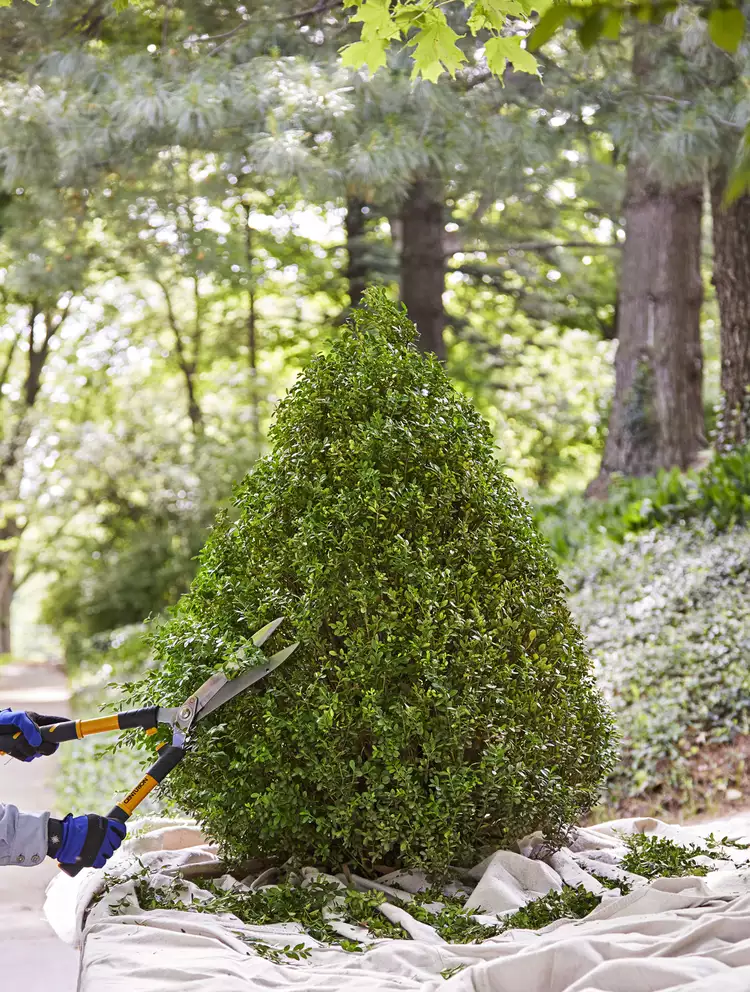
Boxwood is a popular staple in formal gardens, where it acts as a border and lines walkways. In more contemporary landscapes, it can be trimmed into shapes, including orbs, cones, and, in some cases, animal figures. Choosing a variety of boxwood already somewhat in the shape you want is a good first step in having a healthy plant. Knowing the best ways to prune boxwood will keep it thriving.
There's something about pruning boxwood that makes many people nervous. Perhaps you're wondering about when to prune boxwood and if you should trim it in spring or fall. Maybe you're worried that if you make a wrong cut, you'll deal with the aftermath year-round because boxwood shrubs are evergreen. Boxwood is also slow-growing, so perhaps you're concerned that if you prune too much off, it'll take years for the plant to recover. Now, you can make your cuts with confidence by following these seven tips that will help you know exactly how and when to prune boxwood.
1. Use the Right Tools for Pruning Boxwood
The right tools make gardening tasks both easier and faster. The best tool for pruning boxwood is a pair of sharp handheld pruning shears. Boxwood shrubs are made up of many small branches, making handheld shears the tool of choice. A high-quality pair of bypass pruning shears will last decades and are indispensable throughout the landscape. If the boxwood you want to prune is large and significantly overgrown, a folding handsaw will be useful. A handsaw's thin, curved blade, coupled with its short length, will help you make cuts inside a dense shrub.
2. Prune Boxwood in Spring
The best time when to prune boxwood is in spring. Pruning will encourage new growth, and spring is the natural time in a plant’s annual life cycle for plenty of new growth to occur. Expect a flush of new stems and leaves to emerge from pruned boxwood stems about 4 weeks after pruning.
Moderate spring temperatures followed by warm summer temperatures allow the new growth to mature before cold weather returns in fall. Boxwood shrubs that are pruned in late summer or fall are more likely to be damaged, sometimes to the point of death, during the winter. The tender new growth is vulnerable to freezing temperatures.
There is one exception to the spring pruning rule for boxwood—dead, damaged, or diseased wood. Prune these troublesome branches away as soon as you notice them. Otherwise, add boxwood pruning to your spring garden to-do list.
3. Get Rid of Deadwood
Every pruning job, whether pruning apple trees or boxwood shrubs, begins with removing dead, damaged, or diseased branches. Trim away leafless boxwood branches by cutting the dead stems back to the base of the plant. Look for and remove broken branches and those that show signs of disease. In regions with very cold winters, it's not uncommon for boxwood to emerge from winter with brown or black foliage. This foliage and the accompanying woody tissue are dead. Now is when to prune boxwood's winter-damaged branches back to live wood, and the plant will likely recover.
4. Limit Shearing
It's tempting to grab the hedge shears or even an electric trimmer to make fast work of trimming up a boxwood shrub. Resist! Shearing causes the plant to form an outer shell of green growth and a dead zone of bare branches in the interior. Boxwood shrubs with an interior dead zone have a weak structure and are more susceptible to pests and diseases. If you feel you need to shear a plant to achieve a desired shape, first thin out select branches of the plant and then finish with a light shear.
5. Thinning Boxwood is the Way to Go
A healthy boxwood shrub has evergreen leaves all along its branches. Sheared shrubs (trimmed into an orb or other unnatural shape) tend to develop into weak plants. Instead of shearing these evergreen shrubs to reduce size, thin them out. Regular thinning produces dense, leafy branches by allowing sunlight to reach the center of the plant. Sunlight is critical to producing foliage.
To thin a boxwood, use handheld pruning shears to selectively cut too-tall branches back to a larger branch or the base of the plant. Continue working with one branch or a cluster of branches at a time to create a visually pleasing shrub. Thinning is time-consuming, but it's the very best way to create a long-lived, healthy boxwood of a desired size.
6. Follow the One-Third Rule
Significantly overgrown shrubs benefit from phased pruning. When pruning, never remove more than one-third of a boxwood's mass. Depending on the final desired size of the plant, pruning might need to take place over the course of two to three years.
In year one, remove about one-third of the plant's mass. The following year, remove another one-third of the growth. Continue pruning away one-third of the plant annually until the desired size is reached. Then, prune your boxwood each spring to maintain the desired size.
7. Keep Pruning Tools Clean
If boxwood blight, a deadly fungal disease of boxwood, is prevalent in your area, thoroughly clean any tools used in pruning both before and after the pruning session. Dip tools in a 70% alcohol solution for at least 30 seconds and allow to air dry. Spray disinfectants that contain 70% alcohol can also be used. Avoid using Listerine or Lysol, which has not been proven to rid tools of pathogens and can cause corrosion. Distilled vinegar isn't strong enough to do the job, and baking soda can alter the soil's pH balance, affecting plant growth.
Now that you know how and when to prune boxwood correctly, grab your pruning shears—it’s time to shape up your shrubs.
New